

 Accused war criminal Ben Roberts-Smith is spotted on the Gold Coast after being granted bail in a Sydney court - as his support network assembles
  Airline Bankrupted by Trump’s Soaring Fuel Prices Pleads for Bailout
  Rep. Sam Liccardo Probes Suspicious Oil, S&P Futures Trades Ahead Of Trump's Iran War Update: 'Timing Ind
COVID-19 Market Crash (2020): How a Global Health Crisis Shook the Financial World
March 2020 • Global Crisis
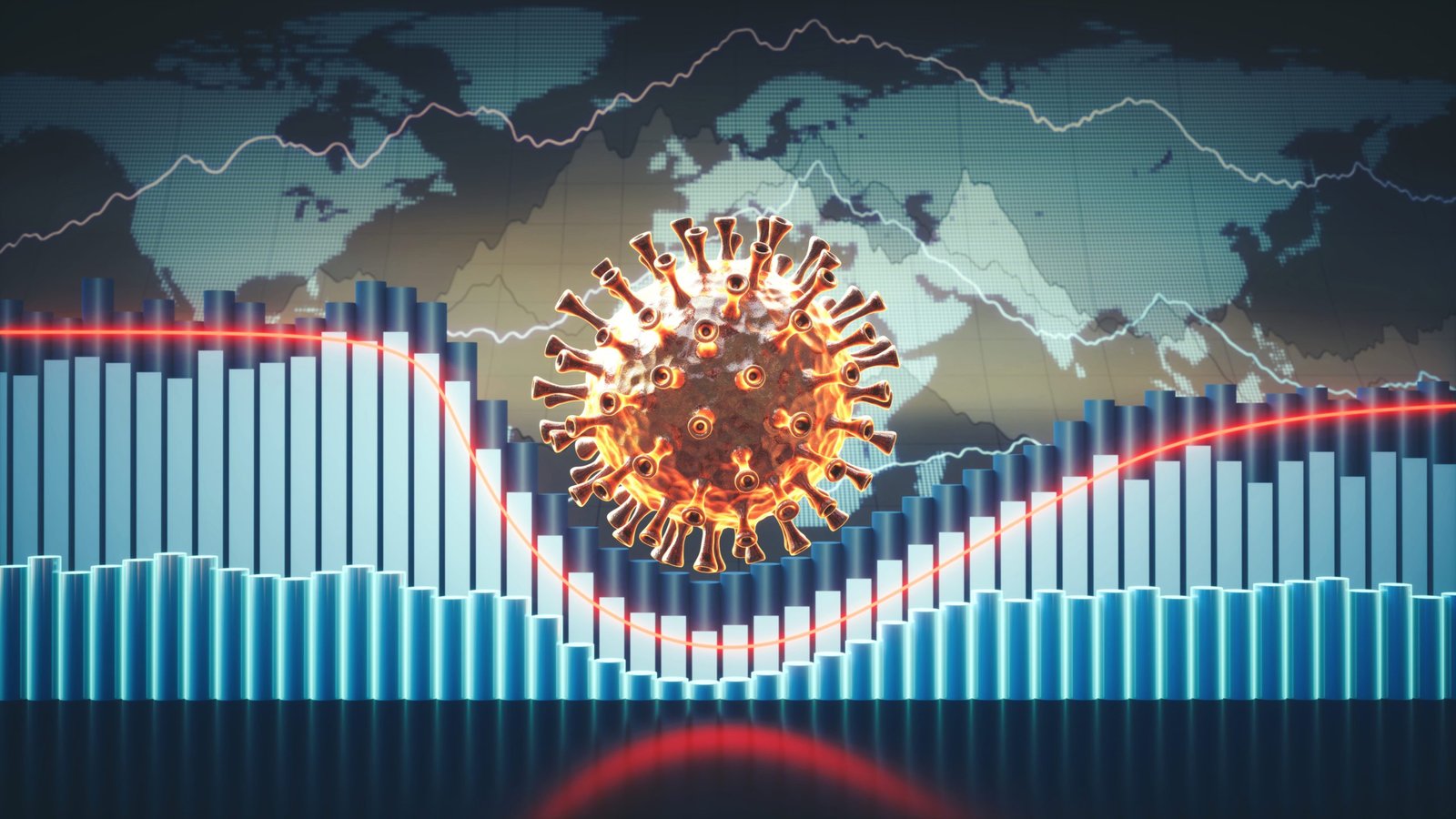
The COVID-19 market crash of 2020 was one of the fastest and most dramatic financial collapses in modern history. What began as a public health emergency quickly turned into a full-scale global economic shock, affecting stock markets, oil prices, gold demand, business activity, and consumer confidence across nearly every region of the world.
As countries imposed lockdowns, travel restrictions, and business closures, investors reacted with fear and uncertainty. Major stock indices fell sharply within weeks, industries such as tourism and aviation nearly froze, and global supply chains were severely disrupted. The crisis did not resemble a traditional recession caused by weak banking systems or long-term debt bubbles. Instead, it was sudden, global, and deeply tied to the shutdown of real-world economic activity.
The COVID-19 crash showed how quickly confidence can disappear when health, business, and financial systems are all hit at the same time.
One of the most important features of the COVID-19 crash was speed. Markets did not decline gradually. They collapsed in a matter of days as investors rushed to sell risky assets and move into cash or safer instruments. This sudden panic created extreme volatility across equities, commodities, bonds, and currencies. Governments and central banks had to step in quickly with emergency stimulus, interest rate cuts, liquidity programs, and rescue packages to prevent a deeper economic collapse.
Why the COVID-19 Market Crash Happened
The crash happened because the pandemic directly interrupted both supply and demand at the same time. Factories stopped production, logistics slowed down, workers stayed home, and consumers cut back spending. Businesses lost revenue almost overnight, especially those that depended on travel, hospitality, entertainment, and in-person services. Investors began pricing in a global recession, and fear spread rapidly across financial markets.
- Lockdowns halted economic activity in many countries
- Global supply chains were disrupted
- Consumer spending dropped sharply
- Investor panic triggered massive sell-offs
- Uncertainty about the duration of the pandemic increased volatility
Another major factor was uncertainty. No one knew how long the crisis would last, how severe the virus would become, or which sectors would recover first. That uncertainty pushed markets into a defensive mode, where investors sought safety and liquidity above all else.
Impact on Fiat Currency
During the early stage of the crash, fiat currencies faced strong pressure, especially in emerging markets. The US dollar strengthened because investors around the world rushed toward liquidity and stability. In times of panic, the dollar is often seen as the most trusted reserve currency, so demand rose sharply. Other currencies weakened as capital moved out, trade slowed, and economic conditions worsened.
Central banks responded with aggressive monetary easing. Interest rates were cut, massive liquidity was injected into markets, and governments launched large fiscal stimulus plans. While these steps helped stabilize markets, they also raised longer-term concerns about inflation, debt expansion, and currency purchasing power.
Impact on Gold
Gold regained its status as a safe-haven asset during the COVID-19 crisis. Although it experienced some short-term volatility in the initial panic, investor demand for gold increased as uncertainty grew. People turned to gold because it has historically been seen as a store of value in times of crisis, especially when confidence in paper assets weakens.
As central banks injected more money into the financial system and interest rates remained low, gold became even more attractive. Investors used it as protection against instability, currency weakness, and inflation risks that could emerge later from stimulus-heavy economic recovery plans.
Impact on Oil Prices
Oil was one of the hardest-hit assets during the COVID-19 crash. Since travel stopped, factories slowed, and transport demand dropped sharply, global oil consumption collapsed. This created a historic imbalance between supply and demand. Storage capacity became a major issue, and energy markets went into chaos.
The crash proved that oil is highly sensitive to economic activity. When the world stops moving, oil demand falls immediately. Unlike gold, which can benefit during fear, oil often suffers badly during recessions or sudden demand shocks. The COVID period became one of the clearest examples of this relationship.
How Governments Responded
To limit the damage, governments introduced stimulus packages, direct payments, business support programs, tax relief, and loan facilities. Central banks also played a major role by lowering rates, buying assets, and ensuring banks had enough liquidity. These interventions helped restore confidence and supported a gradual recovery in asset prices.
However, the recovery was uneven. Technology companies recovered faster than traditional sectors, while small businesses, low-income workers, and many service industries faced longer-lasting damage. This made the COVID-19 crash not only a financial event but also a social and structural economic turning point.
Key Lessons from the COVID-19 Crash
- Global markets can collapse very quickly when uncertainty spreads
- Liquidity becomes critical during panic periods
- Gold often gains strength as a defensive asset
- Oil prices are highly vulnerable to demand destruction
- Fiat currencies can remain stable only with strong policy support
- Government and central bank intervention can reduce long-term damage
In the end, the COVID-19 market crash became one of the defining economic events of the modern era. It reshaped how investors think about risk, how governments handle crises, and how interconnected the global economy truly is. Its effects were felt not only on stock charts but also in everyday life, from jobs and savings to trade and inflation.
For investors, policymakers, and businesses, the crisis remains a strong reminder that markets do not move on numbers alone. They also move on confidence, fear, uncertainty, and the ability of institutions to respond under pressure.